
Icynene Radiant Barrier Installation: The Fort Worth Owner’s Guide
Radiant barrier installation for homes with Icynene spray foam typically costs $1,450 – $2,800 in Fort Worth when installed professionally, and we carry Icynene-compatible radiant barrier material on our trucks for same-week installation. If your attic has Icynene open-cell or closed-cell foam on the roofline and you’re noticing upstairs rooms that won’t hold temperature, the radiant barrier layer is often the missing piece. Most Fort Worth homeowners discover the issue in July or August, when the upstairs runs 8 – 12 degrees warmer than the thermostat setting no matter how long the AC runs.
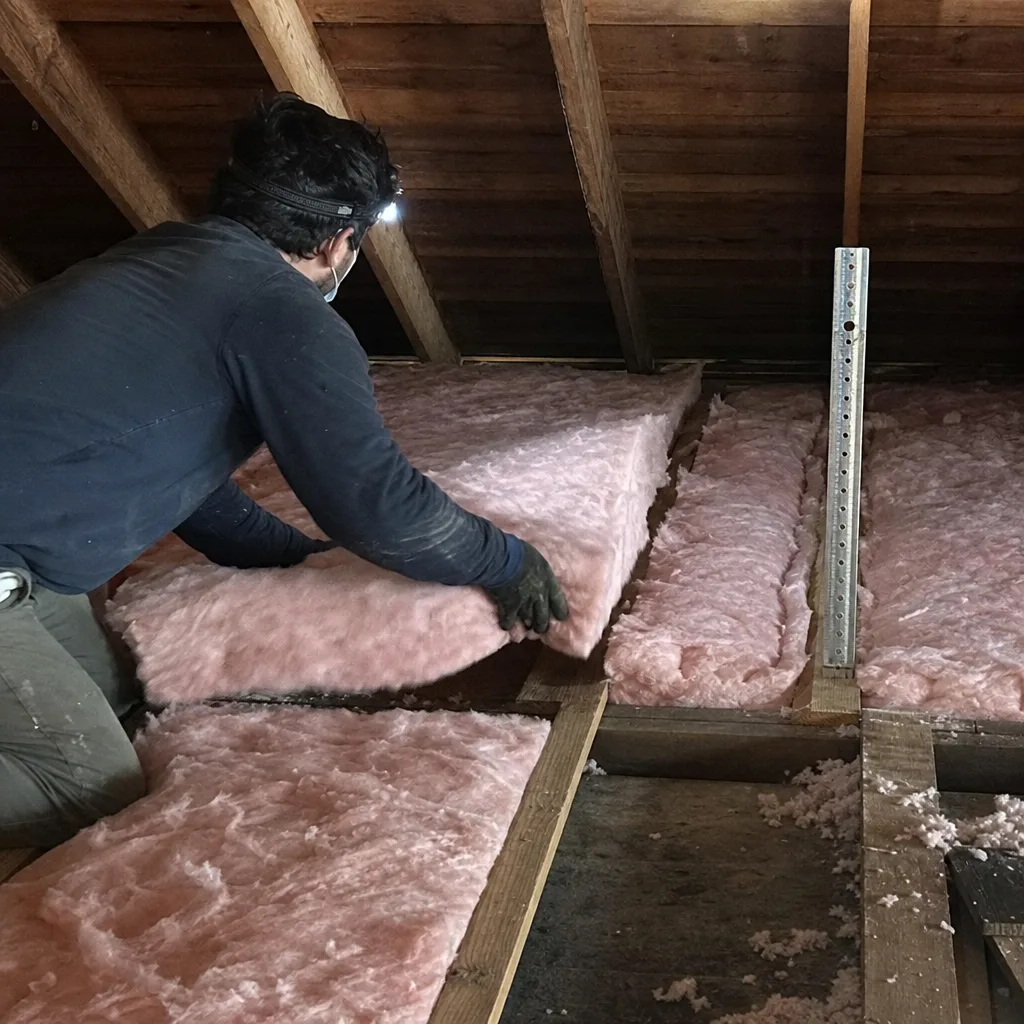
A radiant barrier works differently from insulation. The Icynene foam slows conductive heat transfer through the roof deck. The radiant barrier reflects radiant heat before it ever reaches the foam surface. Without both layers working together, that North Texas sun loads your attic with heat that the foam then has to fight against. We see this combination installed wrong more often than we see the materials themselves fail.
Which Icynene Models This Applies To
Radiant barrier installation pairs with every Icynene spray foam product line we work with: Icynene Classic open-cell, Icynene ProSeal closed-cell, and Icynene Lite. The compatibility question isn’t about the foam. It’s about the roof assembly. Homes with Icynene applied directly to the underside of the roof deck benefit most from a radiant barrier installed on top of the rafters or as a foil-faced layer over the foam itself. If your Icynene sits on the attic floor instead of the roofline, radiant barrier goes on the rafters above it.
One gotcha we run into regularly in Fort Worth: foil-faced radiant barrier stapled directly over closed-cell foam without an air gap does almost nothing. Radiant barrier needs at least a ¾-inch air space facing the heat source to reflect properly. When foil is pressed flat against foam or sheathing, it conducts heat instead of reflecting it. That’s the most common installation mistake we correct. Neil Barron has walked more than a few attics in Fairmount and Mistletoe Heights where the previous installer treated radiant barrier like wallpaper. It isn’t. It’s a heat mirror, and it needs room to work.
On the parts side, we stock both double-sided foil and foil-faced kraft radiant barrier in 4-foot and 6-foot rolls, plus perforated options for roof applications where condensation control matters. For Icynene assemblies specifically, we prefer perforated radiant barrier when installing under the roof deck, because it lets moisture vapor pass through instead of trapping it against the foam. In Fort Worth’s humidity swings, that detail prevents problems you won’t see until the sheathing tells you about them years later.
Signs Your Icynene Radiant Barrier Installation Is Failing
- Upstairs rooms won’t cool below 78°F on 100°F days. The Icynene foam is slowing conduction, but without a functioning radiant barrier, the attic air temperature climbs past 130°F and the heat radiates down through the ceiling drywall.
- Sagging or detached foil in the attic. Cheap staples and high attic humidity will let radiant barrier pull loose from the rafters over 5 – 7 Fort Worth summers. Once it sags, the air gap collapses in spots and reflection drops sharply.
- Tears or punctures from attic work. HVAC technicians, electricians, and cable installers often cut or step through radiant barrier to reach equipment. A 2-foot tear can reduce overall reflectivity by 15 – 20% depending on placement.
- Dust film on the foil surface. Radiant barrier loses effectiveness when dust settles on the reflective face. A dull gray film over formerly shiny foil cuts reflective performance significantly. This is a common issue in older Fort Worth homes with decades of fine dust circulating through the attic.
- Hot ceiling directly under the attic hatch. If the hatch itself lacks a radiant barrier cover, you’ll feel a distinct hot spot when standing beneath it. That’s radiant heat bypassing both your foam and your barrier at a single point.
Replacement Cost & What’s Included
Radiant barrier installation in Fort Worth runs $1.20 – $2.40 per square foot of attic floor area, with most single-story homes landing between $1,450 and $2,200 and larger two-story homes reaching $2,800. The price depends on your attic’s accessibility (low-slope roofs and tight truss spacing add labor time), whether we’re replacing existing barrier or installing new, and whether your Icynene foam needs any prep work before the barrier goes up.
Here’s the breakdown we give every homeowner before work starts:
- Radiant barrier material: $250 – $500 depending on attic size and foil grade
- Labor (stapling, taping, sealing seams): $700 – $1,400
- Attic hatch insulation cover: $75 – $150
- Cleanup and photo documentation: included, always
You will have your exact written number before we open the first roll. No ranges on the invoice. No surprise line items after the job. That’s how Thistledown Insulation Fort Worth has operated since 2003, and it’s backed by the 365-Day Done Right Promise: if the barrier sags, tears, or underperforms within a year of installation, we come back and make it right without a debate.
DIY or Call Us?
Radiant barrier installation is physically demanding but not inherently dangerous to DIY. The risk is doing it wrong. We’ve corrected enough DIY jobs in Fort Worth to know the pattern: foil stapled flat against sheathing with no air gap, seams left untaped, no allowance for attic ventilation. The material cost to redo a 1,500-square-foot attic is around $300 – $400. The cost of realizing it never worked is two more Texas summers of a hot upstairs.
If you want to check your current barrier yourself, you can safely do a visual inspection from the attic hatch with a flashlight. Look for sagging foil, torn sections, and dust buildup. What you shouldn’t do is crawl across joists over an open attic floor, especially with Icynene foam hiding the framing layout. One wrong step through the ceiling drywall costs more than professional installation. Call us at (682) 233-8300 and we’ll inspect it properly, shoe covers and drop cloths included.
FAQs
A properly installed radiant barrier over Icynene foam lasts 15 – 20 years in Fort Worth’s climate, with the main degradation factors being dust accumulation on the reflective surface and physical damage from attic traffic. Perforated barrier installed under the roof deck tends to last longer than stapled-up foil because gravity isn’t fighting the fasteners. If your barrier is over 12 years old, a free inspection will tell you whether you need replacement or just a cleaning.
Small tears under 2 feet can usually be repaired with foil tape and a few new staples, and that’s a service call we can often complete the same day. Larger tears, sagging across multiple rafter bays, or widespread dust film mean replacement is the more honest fix. We’ll show you photos of the damage before recommending either path, so you’re deciding with your own eyes.
Most single-story Fort Worth homes take us 4 – 6 hours, and two-story homes usually fall within a full day. That includes laying drop cloths from the front door to the attic hatch, installing the barrier, sealing seams, adding or replacing the hatch cover, and cleaning up. You’ll have a photo of the finished attic and the clean floor before we pull the van away.
We keep Icynene-compatible radiant barrier in stock on our trucks, along with Reflectix products for homes that need a different reflective solution. We don’t ask you to order material or measure anything. The number we quote includes product, labor, and cleanup. Call (682) 233-8300 for an exact quote. Estimates are free, and a live person answers every call.
Know what’s going in before we start, and know what it cost before we finish. That’s the standard for every radiant barrier job we do in Fort Worth.
Thistledown Insulation Fort Worth is an independent insulation service provider. We install Icynene-compatible radiant barrier systems and are not affiliated with or endorsed by Icynene or its parent company.
Written by Neil Barron, Owner, Thistledown Insulation Fort Worth at Thistledown Insulation Fort Worth, serving Fort Worth and nearby areas.