
Demilec Attic Air Sealing: The Fort Worth Owner’s Guide
We stock and install Demilec-compatible attic air sealing in Fort Worth, with typical installed pricing running $1,400 to $2,800 depending on attic square footage and how much of the existing seal needs to come out first. Same-day or next-day assessment is standard for us, and yes, we carry the material on our trucks. Most Fort Worth homeowners call after a July utility bill lands harder than expected, or when they’re up in the attic pulling Christmas decorations and notice gray, crumbly foam around a can light that wasn’t like that last year.
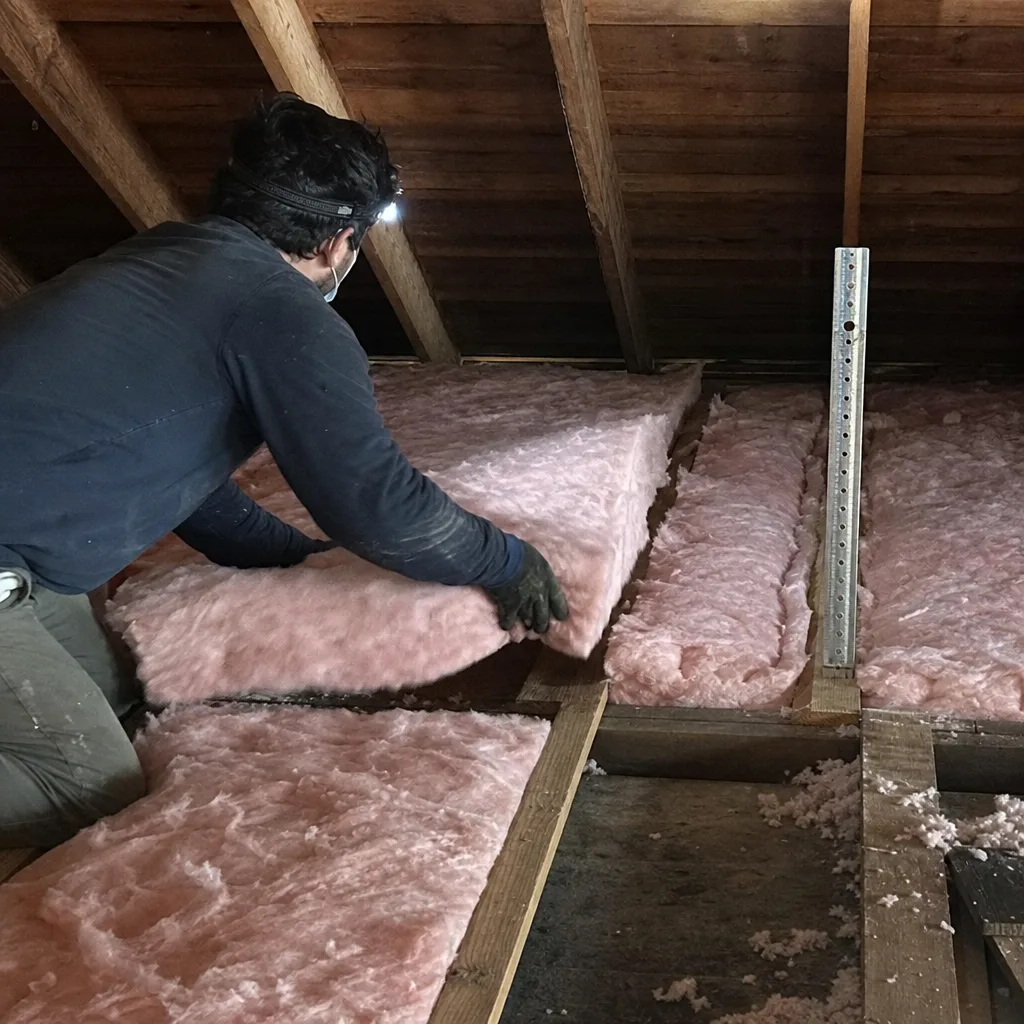
Attic air sealing with Demilec products, typically their closed-cell spray foam applied around penetrations, top plates, and chases, is the part of the insulation system that fails quietly. It doesn’t leak water onto a ceiling. It doesn’t trip a breaker. It just lets conditioned air escape through gaps that open up as lumber dries and shifts in North Texas heat. Neil Barron has walked enough Fort Worth attics to know the pattern: the older the house, the more mechanical penetrations, the more places that seal gets brittle and pulls away.
Which Demilec Models This Applies To
Demilec’s product line for air sealing in residential attics centers on Heatlok HFO and Sealection 500. Heatlok HFO is a closed-cell foam, typically applied at one to two inches for air sealing before blown-in insulation goes over it. Sealection 500 is open-cell, used more often as a full-cavity insulation, but it gets specified for air sealing in vented attics where the homeowner wants a more breathable assembly. The compatibility gotcha most Fort Worth homeowners run into: air sealing around older can lights and bathroom fan housings isn’t a one-product job. Heatlok HFO against an old non-IC-rated can light creates a fire hazard. We use an intumescent barrier or a rated cover first, then seal. That’s a code detail half the bids in town skip.
If you’re trying to identify what’s already in your attic, look for the foam color: Heatlok HFO cures a creamy off-white to light yellow, Sealection 500 more of a bright white with a spongy, open texture. The label on the stud will usually say “Demilec” and the product name, but plenty of Fort Worth attics have the label buried under blown fiberglass that’s shifted. We match the seal work to what’s already there so the chemistry is consistent. OEM Demilec material is what we install for air sealing; aftermarket generic foams exist, but the R-value per inch and the expansion characteristics don’t match, and we won’t put a substitute into your attic. Thistledown Insulation Fort Worth is an independent installer, not affiliated with Demilec. We also stock Reflectix for radiant barrier applications where that’s the better tool for the job.
Signs Your Demilec Attic Air Sealing Is Failing
- Dusty streaks on ceiling drywall seams near interior walls. When air sealing around top plates pulls back, attic air, fine dust, and fiberglass particles get pulled through the gap. You’ll see faint gray lines tracing where the wall meets the ceiling. That’s attic air migrating down the wall cavity.
- A room that runs five to eight degrees warmer than the hallway in the afternoons. In Fort Worth’s August heat, a failed seal around a dropped soffit or knee wall lets superheated attic air pour into one room. You can’t fix it with a bigger AC unit; the leak just moves to the next room.
- You can see daylight at the attic hatch perimeter. The hatch is the most common air sealing failure in Fort Worth homes. Weatherstripping flattens in the heat, the hatch warps, and the gap opens up. It’s the first place we check on every air sealing call.
- Higher humidity upstairs despite the AC running nonstop. Even small penetrations around bathroom fan housings and plumbing stacks let humid outdoor air get pulled into the attic space and then through the ceiling. Closed-cell Demilec foam doesn’t absorb that moisture; a failed seal just lets it through.
- Foam that’s pulled away from the penetration, brittle to the touch, or chewed. Foam pulls away as framing lumber dries and shrinks, typically within the first three years if the seal was applied too thin. Rodents will also chew through open-cell foam in Fort Worth attics; closed-cell holds up better, but still shows teeth marks.
Replacement Cost & What’s Included
In Fort Worth, Demilec attic air sealing replacement typically lands between $1,400 and $2,800 installed. The spread depends on three things: how many penetrations need addressing (a 1,800-square-foot house might have 40 or more can lights, fans, chases, and top plates), how much old material must be cut back or removed first, and whether the attic is accessible enough to work safely in peak summer. A small hatch-only seal can be under $500. A full top-plate seal with removal of failed open-cell foam runs toward the high end.
- Assessment and written quote: Always included, always before work. Your number is your number.
- Old foam removal: $150 to $600 depending on how much failed material must go.
- Demilec foam material per penetration: $18 to $42, based on penetration size and foam depth specified.
- Labor per hour for a two-person crew: $95 to $145, most full jobs running 6 to 12 hours.
- Hatch sealing with new weatherstripping: $120 to $240.
- Intumescent covers for non-IC can lights: $12 to $28 each, installed.
The 365-Day Done Right Promise covers every air sealing job. If a seal fails inside a year, we come back and make it right, no debate. That’s the standard, not an upgrade.
DIY or Call Us?
What you can safely do: check the attic hatch gap with a flashlight after dark, look for dust streaks on ceilings, and peek at visible foam around any penetrations you can reach without climbing into the attic. That’s a good homeowner inspection. What you shouldn’t do: spray foam into a can light housing, work on an attic ladder in July when the attic is 140 degrees, or try to match foam chemistry without knowing what’s already up there. Spray foam is not a caulk-and-walk material. It expands, it reacts with humidity, and it needs correct depth to seal. A poorly applied bead of one-part foam from a hardware store can actually make things worse by sealing the wrong side of a leak and trapping moisture.
If the attic is reasonably walkable, a homeowner with a respirator and a good light can handle basic hatch weatherstripping. For everything else, call (682) 233-8300. We’ll look, measure, and give you a written number before anything gets opened.
FAQs
Properly applied Demilec closed-cell air sealing lasts 20 to 30 years in Fort Worth attics, and open-cell sealing typically lasts 10 to 20 years before it starts to lose its grip. The Texas heat itself doesn’t break down the foam; what fails is the bond between foam and framing as the lumber shrinks and moves. Call (682) 233-8300 if you’re seeing signs it’s let go.
Yes, in most Fort Worth homes, spot repairs work. If a handful of penetrations have pulled free and the rest of the seal still looks intact, we cut back the failed section and reapply. Full replacement only makes sense when the original seal was too thin, poorly bonded, or chewed through in multiple areas. A quick attic look tells us which camp you’re in.
A full Demilec air sealing replacement in a Fort Worth attic usually takes one day for a two-person crew, with a second morning for larger two-story homes or heavy old-foam removal. We show up with the material, the drop cloths, and a plan, and we’re done before the kids are home from school in most cases.
Yes. Our trucks carry Heatlok HFO, Sealection 500, and the intumescent can-light covers we use for fire-safe sealing. If your project calls for Reflectix radiant barrier as part of the assembly, we carry that too. We don’t have to order and come back.
Written by Neil Barron, Owner, Thistledown Insulation Fort Worth at Thistledown Insulation Fort Worth, serving Fort Worth and nearby areas.