
Rockwool Radiant Barrier Installation: The Fort Worth Owner’s Guide
We stock Rockwool-compatible radiant barrier products on our trucks and install them across Fort Worth for $1.50 to $3.25 per square foot, materials and labor included, with most attic jobs finished in a single day. If you’re reading this, you’ve likely noticed your existing radiant barrier sagging between rafters, tearing at the staple points, or failing to keep the upstairs bedrooms cool during a July afternoon when the attic hits 140 degrees. Neil Barron and our crew handle Rockwool radiant barrier installation from start to finish, with a written price in your hand before any material comes off the truck.
Key Takeaways
- Rockwool radiant barrier pairs well with mineral wool batts, but the barrier itself is typically a foil-faced product installed under the roof deck, not a Rockwool-branded sheet.
- Fort Worth’s summer attic temperatures regularly exceed 130°F, which breaks down cheap adhesive-backed barriers in 5 to 7 years.
- Most installations in Fort Worth run $1.50 to $3.25 per square foot depending on roof pitch, access, and whether old material needs removal.
- We answer calls live 24/7 at (682) 233-8300 and can usually schedule a same-week install.
Which Rockwool Models This Applies To
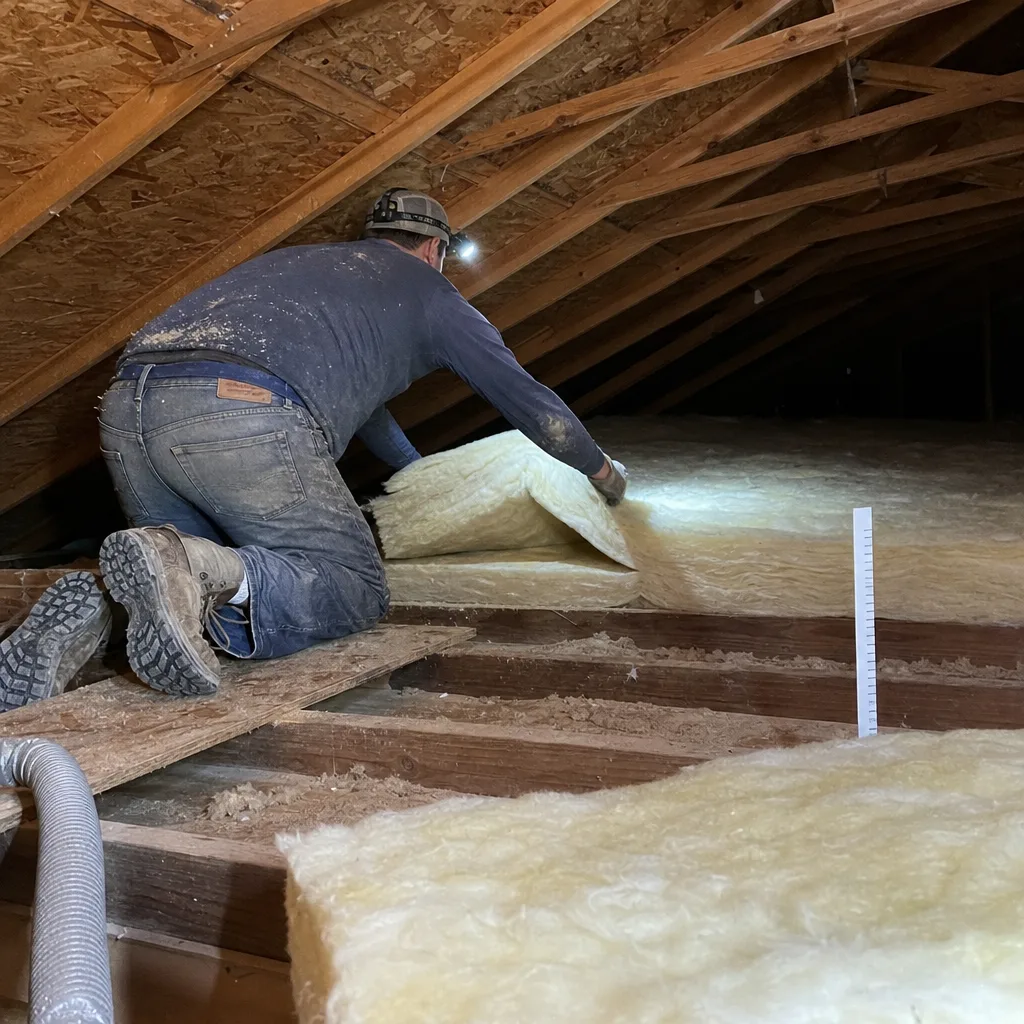
Let’s be clear about what we’re installing here. Rockwool’s mineral wool products, Safe’n’Sound and Comfortbatt, are batts that go between joists and studs. The radiant barrier is a separate foil-faced product, usually a reinforced aluminum or aluminized sheet, installed under the roof deck or over the attic floor insulation. In a Fort Worth attic, the two work together: the radiant barrier reflects radiant heat away from the living space while the Rockwool batts slow conductive heat transfer. Thistledown Insulation Fort Worth is an independent service provider, not affiliated with Rockwool, but we install radiant barrier materials that are compatible with every Rockwool batt product from Safe’n’Sound to Comfortbatt R-30, since the radiant barrier sits independent of the batt layer.
The compatibility question that actually matters is the roof assembly, not the insulation brand. If your roof has a ridge vent and soffit vents, we want a perforated radiant barrier so moisture passes through. A solid or non-perforated barrier against an unvented roof deck traps condensation, and that’s how you get sheathing rot within a few years. We check the venting first, then choose the material. For homes with closed-cell spray foam on the roofline, skip the radiant barrier entirely: the foam already blocks radiant heat, and stacking a barrier adds cost without measurable benefit.
Signs Your Rockwool Radiant Barrier Installation Is Failing
- Sagging or drooping sheets between rafters. High humidity and the thermal cycling of Fort Worth summers cause the foil facing to separate from its backing or staples to tear through. This happens faster in attics that run hotter than 130°F.
- Tears near the attic hatch or along the gable ends. Storage boxes, holiday totes, and chimney access all put mechanical stress on the barrier. Once a tear opens, heat finds the gap and works it wider.
- Upstairs rooms that stay hot after the AC runs all afternoon. No barrier works miracles, but a properly installed radiant barrier in Fort Worth should keep attic temps 20 to 30 degrees cooler. If the upstairs runs 80 degrees while the thermostat reads 75, the heat load is coming from above, not from bad ductwork.
- Dust or foil flakes sprinkled across the insulation. This is a sign the barrier’s facing has delaminated, a failure common in cheaper products that use a thin foil layer glued to a paper or plastic substrate. The reflective surface is gone, and with it, the performance.
- Discolored or darkened patches on the foil. Moisture staining means a leaking roof, and no radiant barrier survives roof water. We flag this immediately when we see it, because the barrier is the symptom, not the problem.
Replacement Cost & What’s Included
For a typical Fort Worth ranch or two-story home with 1,500 to 2,000 square feet of attic floor, expect to pay between $1,500 and $4,800 for a full radiant barrier replacement, including removal of old material, prep work, and labor. The range comes down to four things: roof pitch, attic accessibility, whether we’re removing a failed barrier or starting fresh, and whether you choose a basic single-foil sheet or a double-sided reinforced material. Our pricing includes shoe covers at your front door, drop cloths from the entry to the attic hatch, and a photo of the clean-up before we leave. Every customer gets a written price before work begins, and the installation carries our 365-Day Done Right Promise. If it’s not right, we’re back, no debate, no fine print.
DIY or Call Us?
You can replace a torn section of radiant barrier yourself if the tear is small, in a reachable spot, and your roof vents are in good shape. Stapling foil in a 140-degree attic on a Saturday is honest work, and we respect the owner who wants to handle it. But if the barrier has failed across multiple bays, if sections have delaminated, or if you see moisture staining, call (682) 233-8300. We find DIY jobs about half the time at the quoting stage, and the most common problems are barriers stapled to the wrong face of the rafter and perforated barriers installed against unvented roof decks. Neither is easy to undo. Our crew does this work every week in Fort Worth attics, and we carry the right fasteners and the right material on the truck.
Rockwool Radiant Barrier Installation FAQs
A properly installed perforated radiant barrier lasts 15 to 20 years in a Fort Worth attic, while adhesive-backed single-foil products typically fail in 5 to 7 years. Fort Worth heat is the main killer. Call (682) 233-8300 and we’ll tell you which material makes sense for your roof pitch and venting.
Yes, if the damage is confined to one or two sections, we can cut out the bad material and patch new pieces in place for $75 to $150 per section including labor. If the barrier shows delamination across more than a third of the attic, replacement is cheaper than chasing patches.
Most radiant barrier installations in Fort Worth attics take 4 to 6 hours for a single-story home and 6 to 8 hours for a two-story with a steep roof pitch. We schedule one crew, and we’re usually in and out the same day.
We stock reinforced double-sided and single-foil radiant barrier materials on the truck, along with the correct fasteners for both rafter and floor applications. If your project calls for a particular spec, we’ll have it ready by the install date.
Call (682) 233-8300 for a free estimate. Neil Barron or a member of our Fort Worth crew will walk you through what product goes where, what it costs, and when we can start. Know what’s going in before we start, and know what it cost before we finish.
Written by Neil Barron, Owner, Thistledown Insulation Fort Worth at Thistledown Insulation Fort Worth, serving Fort Worth and nearby areas.